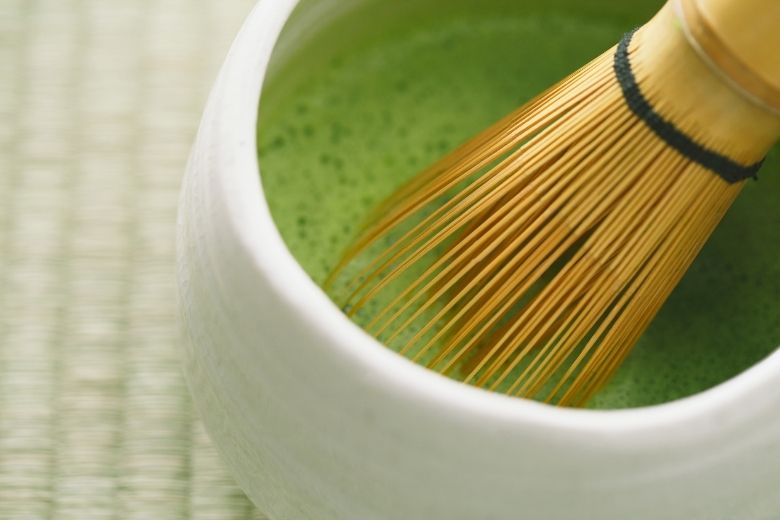
Explore the six main tea families and how their unique characters shape our cup.
Tea is like music — each type a different note, each infusion a new melody. From the earthy depths of dark tea to the airy elegance of white tea, every style brings a different rhythm to our senses.
At TEATUNE, we honour this diversity by sourcing the finest single-origin teas that let us compose our own perfect blend — with flavour, aroma, and wellness in harmony.
All Real Tea Comes From One Plant
All true teas — green, black, oolong, white, yellow, and dark — come from the same plant: Camellia sinensis. What gives them such variety? It’s not the species, but how the leaves are processed.
The magic lies in oxidation (how much the leaves react with air) and post-fermentation (where microbes transform flavour and compounds over time).
The Six Tea Families — A Quick Overview
Type
Processing Feature
Taste & Aroma
Examples
Green Tea
No oxidation; pan-fired or steamed
Fresh, grassy, lightly astringent
Longjing, Sencha, Biluochun
White Tea
Minimally processed; natural withering
Light, sweet, floral with a hint of honey
Silver Needle, Bai Mu Dan
Yellow Tea
Lightly oxidized and “sealed yellow” fermentation
Mellow, nutty, with subtle earthy warmth
Junshan Yinzhen, Huoshan Huangya
Oolong Tea
Partially oxidized; curled or twisted
Complex, floral, creamy or roasted depending on style
Tie Guan Yin, Da Hong Pao
Black Tea
Fully oxidized; rolled and dried
Bold, malty, caramel or fruity tones
Darjeeling, Keemun, Assam
Dark Tea
Post-fermented; aged over time
Earthy, smooth, sometimes tangy and mellow
Pu-erh, Liu Bao
Fun Fact: The term “black tea” in the West refers to what Chinese call “red tea” (hong cha), due to its reddish-brown liquor.
Tea Traditions Across the Globe
Each culture has nurtured its own tea identity:
Japan: Ceremonial-grade matcha and steamed greens.
China: A dazzling spectrum from light whites to ancient dark teas.
India: Robust blacks that power chai culture.
Britain: Afternoon teas with blends like Earl Grey and English Breakfast.
Middle East & North Africa: Minty green teas served with sugar and style.
These traditions continue to inspire how we blend and enjoy tea today.
Why This Matters at TEATUNE
We don’t just offer one “right” way to drink tea. At TEATUNE, we choose our tempo.
Want something calming? Try a white tea. Need a kickstart? Go black or oolong. Feeling reflective? Let a dark tea unfold slowly.
We’re here to provide the ingredients. We create the harmony.
Learn More in the Series:
How Tea Flows Through the Body →
The Nutrients in Tea →
How to Brew Each Type Properly →
Mindful Tea Tasting Tips →
Ready to Explore?
Browse our collections by tea type or health benefit and discover our next favourite sip.
Because every leaf has a story — and every brew is a chance to pause, play, and tune in.
References
· Chen, H., Zhang, X., & Li, Y. (2020). The biochemical mechanisms of tea polyphenols on human health. Journal of Food Science and Technology, 57(11), 3858–3867. https://doi.org/10.1007/s13197-020-04534-6
· Lu, M., & Wu, J. (2019). Traditional Chinese tea classification and health implications. Chinese Journal of Integrative Medicine, 25(4), 284–290. https://doi.org/10.1007/s11655-019-3097-2
· Tea Research Institute of China. (2022). Annual report on tea science and consumption trends in China. Chinese Academy of Agricultural Sciences. [In Chinese]
· Food and Agriculture Organization (FAO) Intergovernmental Group on Tea. (2021). Current market situation and medium-term outlook: 2021–2025. FAO Committee on Commodity Problems. http://www.fao.org/3/cb4479en/cb4479en.pdf